


An atmosphere of feeling of anticipation. I can see the frosty air exhaled by my fellow runners as they perform the "pre-race" shuffle on the starting line.
A quick movement of the hips.
I'm at my local Saturday morning race and I mean business. The countdown begins...
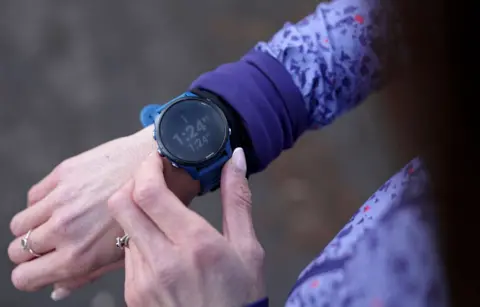
Wait a second. I need to sort my watch. As does the person beside me.
The person in the line tuts. I won't start until… done! Connection established, I'm off.
During the scramble, it's hard to find a wrist without a smartwatch on it. And this isn't only us runners who rely on them.
This is a booming, multi-billion dollar industry. Names like Samsung Galaxy are prevalent, featuring an broad array of diverse versions to cater to a variety of lifestyles. Based on how feature-packed the watch you select, costs can start from an affordable sum to thousands of pounds.
"I find it infuriating, it's impossible to switch off."
"It reassures me… It's like a companion guiding me."
"Please don't notify me about a bad night's sleep."
A small sample of the reactions I've had from like-minded tracker enthusiasts when I inquire what they feel about theirs.
The Monitoring Conundrum
My current opinion on my own device? Right now, irritating. It's telling me I'm off pace, leading me to doubt whether the trees I'm passing under are disrupting my satellite signal.
Countless individuals of us attach these little monitors onto our wrists and wear them constantly, seemingly at ease with the fact they're perpetually recording us.
Long past are the days when we relied on them only to give us an estimation of our step count. Today, they can measure our nightly rest, blood pressure, heart rate variability (HRV), our body battery.
It's tricky to find a health indicator they aren't designed to measure.
But do they do what they advertise? And are the numbers we scrutinise a true reflection of the truth? Do they boost our overall health, or do the avalanche of readings and motivational messages just contribute to our daily stresses?

Addiction or Aid?
"I find myself getting a a little fixated with mine," an individual admits.
While she values how her device records her runs, she finds some of its other features "daunting" at times - a feeling first discovered during a pregnancy.
Prior to discovering she could change its configuration, her smartwatch repeatedly informed her she was failing to be active enough. Now, the watch frequently reports her she's had a bad night's sleep.
"I am caring for a young baby, there's no point to be informed I'm tired," she says. "That fact is perfectly well."
Is it not possible to just remove it?
"I suppose I could, I suppose, but I have this complicated dynamic with it," she says. "I love it for its fitness insights, but I'm unsure whether all the other things it can now do is perhaps overkill for me."
Inside the Device
Every device of smartwatch has its own proprietary way of tracking your bodily functions and interpreting your data, but the most use sensors on the underside of the watch.
They usually emit small, green LED lights onto your arm which can detect pulsation, identifying your pulse rate. Higher-end devices measure changes in the electrical current that runs through the skin to gauge your nervous system activity.
A Fine Balance
A data scientist says that for most people for smartwatches, it's a "difficult line" - while the ever-evolving tech could actually save lives, "identifying issues before we notice anything", it could also turn us watch wearers into the "worried well".
He points out that newer wearables can carry out tests like medical-grade monitoring, which regularly monitor how normal the heart is. They can notify if someone is experiencing an irregular rhythm, where there is erratic electrical activity in the heart causing an uneven pulse.
This does not mean someone is on the verge of a heart attack, but it can give an advance notice they might be more susceptible of a blood clot in the long term.
But how to understand these figures is complicated. The expert worries that as further capabilities are added, people may not be able to fully understand their data.
"I'm not entirely convinced that being able to monitor so much data is such a positive development," he says.
A clinical psychologist studying patient behaviour concurs. Her work into the influence of wearable tech on a cohort of cardiovascular patients suggested a minority of those who were given devices to monitor their heart health experienced heightened worry and were "more inclined to use healthcare resources".
She observed a vicious circle with her patients - they noticed a worrying figure on their watch. They became worried. Their heart rate increased. They got even more concerned. They looked a second time, and their heart rate went up again.
"When people are presented with data about ourselves that we don't really understand then, of course, we are going to become concerned," the psychologist says. "We monitor, we re-check - it becomes a vicious cycle."

